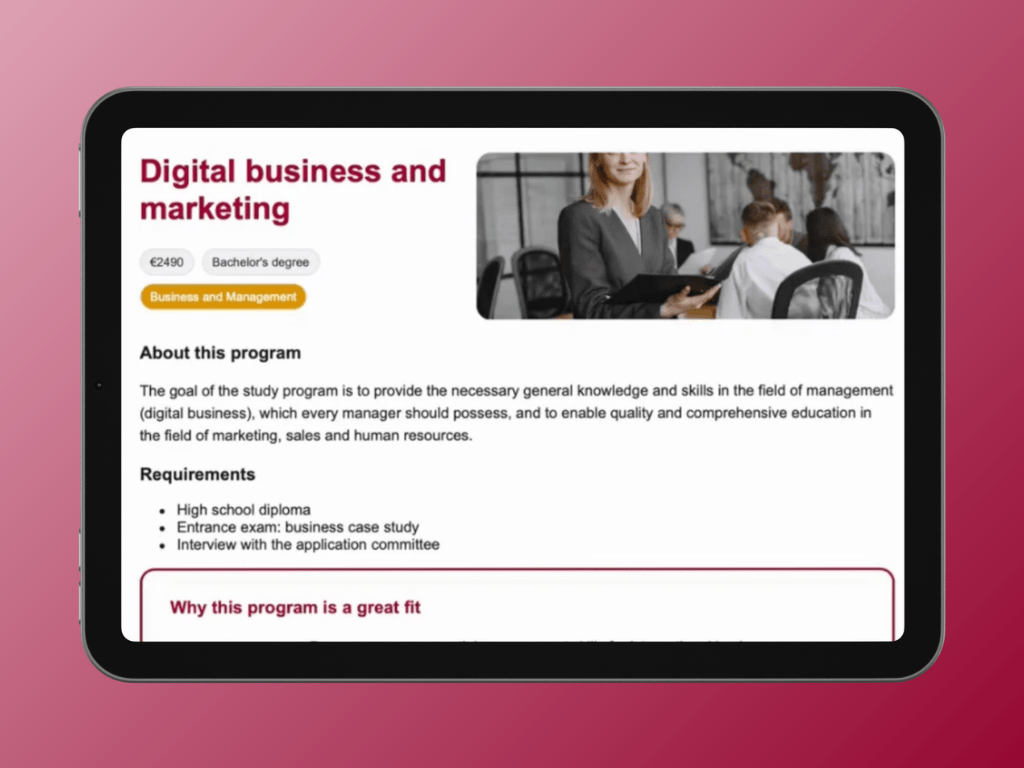
Context/Challenge: Most students focus on the practical career benefits when choosing a study program, but the majority of universities don’t prioritize job outcomes on their program pages.
Action: I teamed up with a developer to create a software for personalized program recommendations based on the student’s professional interests and goals. The prototype was based on programs from Univerzitet Metropolitan.
Result: The MVP incorporates a GPT-based language model that generates recommendations based on each student’s articulated goals and interests, which represents an improvement over traditional static filtering methods.
Initial Context
Going into this project, I was led by two key context pieces:
- Students prioritize career benefits when choosing their study program, and this effect strengthened with each degree level (Keystone Education Group 2025);
- Poor navigation/findability for programs and majors is one of the top prospective students’ frustrations (RNL and Modern Campus 2023).
The Goal
The idea behind this project was to:
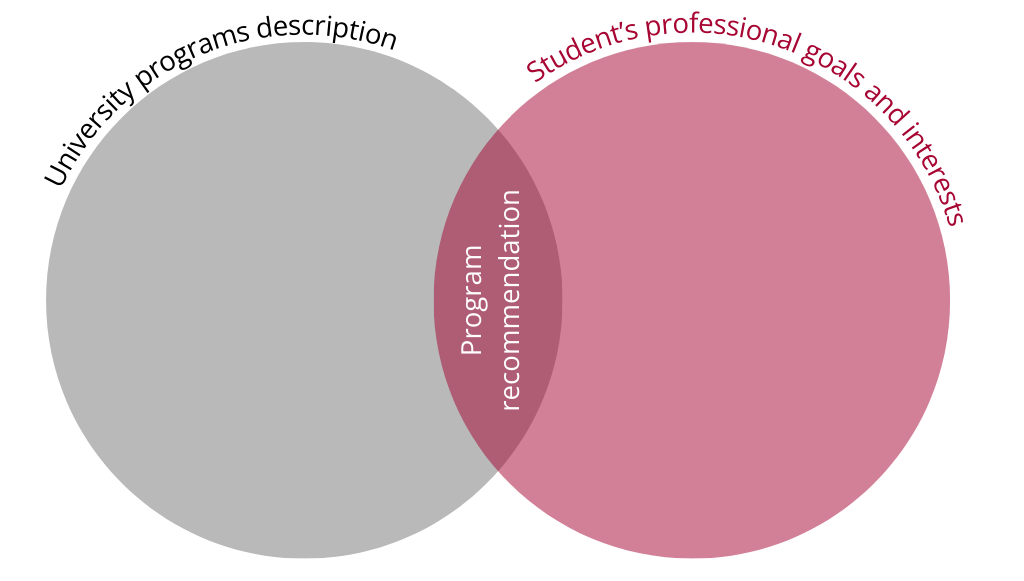
- Embed career information within the student journey for a true personalized experience;
- Provide job advice that is custom for the unique needs and strengths of each student by combining program descriptions with the interests and ambitions the student outlined.
The Structure
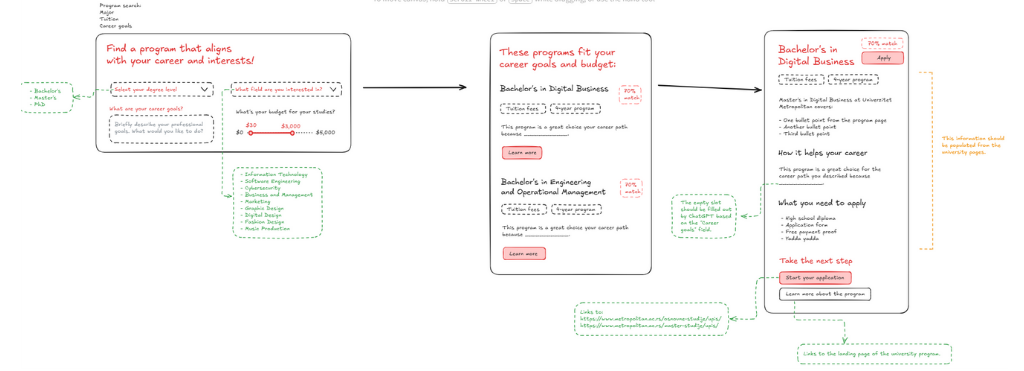
The MVP consists of 3 pages:
- The individual program page;
- The filtering tool;
- The program listing page based on filters.
The Tool In Action
Evaluation
| Key Strengths | Key Weaknesses |
|---|---|
| Personalization via AI. The tool incorporates a GPT model that generates recommendations based on each student’s articulated goals and interests. | Capacity constraints. The GPT-5 nano model has a limited context window. This is fine for prototypes, but more demanding use cases may be necessary for the ‘real’ version. |
| Embedded into the user journey. The student is already on the website, demonstrating high intent. By making their experience better, the university generates trust. | Visual Design Refinements. Visual design (beyond making the interface understandable) was not the focus of the first iteration, and is something to be improved in the future releases. |
Future Expansion Roadmap
- Database expansion. The primary development priority involves expanding the program database to include multiple universities.
- Advanced language model integration. Future iterations could incorporate more sophisticated large language models with expanded contextual processing capabilities.
- Interface improvements. Continued refinement of the user interface will improve visual appeal and functional depth.
- Feature expansion. The first new feature that I’d like to add is the integration of labor market data from employment platforms relevant to the user’s geographic location, which would further connect academic program recommendations with career outcomes.
Sources
Keystone Education Group, State of Student Recruitment (2025), accessed January 22, 2026, https://4722110.fs1.hubspotusercontent-eu1.net/hubfs/4722110/SSR%202025%20Assets/SSR%20report%202025.pdf
RNL, and Modern Campus. 2023 e-Expectations Trends Report: Attracting, Engaging and Enrolling High School Students. 2023. Accessed February 4, 2026. https://resources.moderncampus.com/2023-e-expectations-trends-report-attracting-engaging-and-enrolling-high-school-students-rnl


Leave a Reply