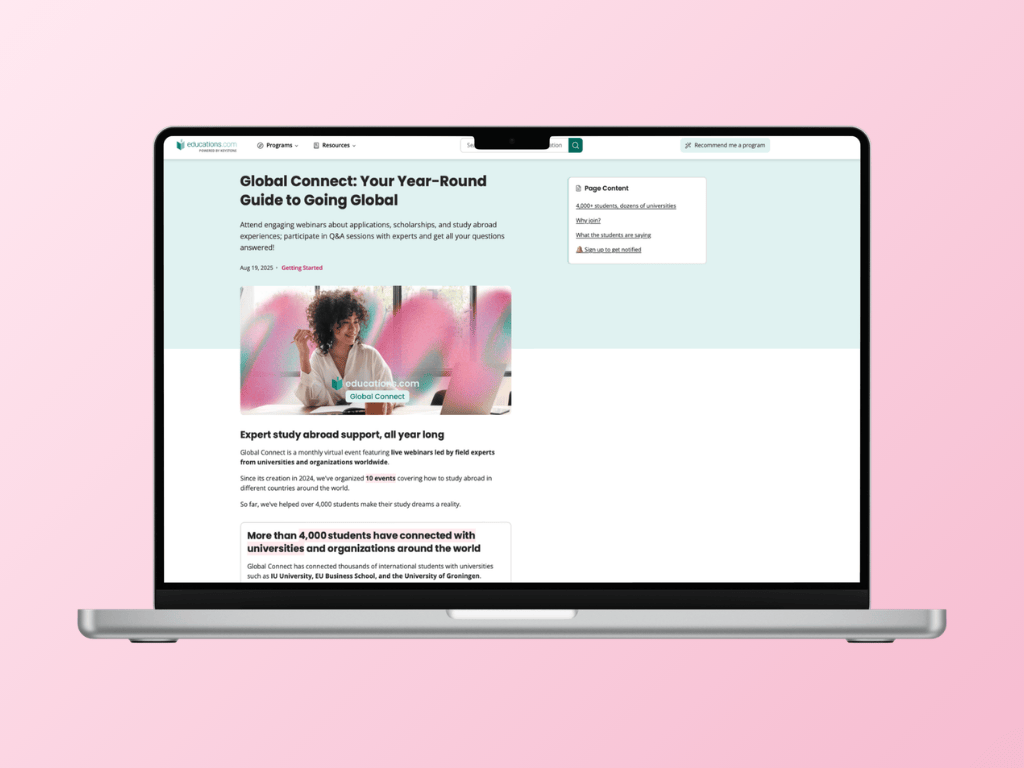
Context/challenge: The landing pages that the event team set up received negative feedback from students, citing lack of trust and visual interest.
Action: I defined the visual brand of both events to make them visually distinct, and then built the pages around those identities.
Result: The sign-ups increased by about 15%.
Initial problem
The Events team set up events pages on the site to promote their two flagship events: Global Study Fair and Global Connect.
The team received feedback from students that the pages weren’t trustworthy or interesting, and I was brought in to resolve this.
Below are screenshots of how the pages for the two events looked.
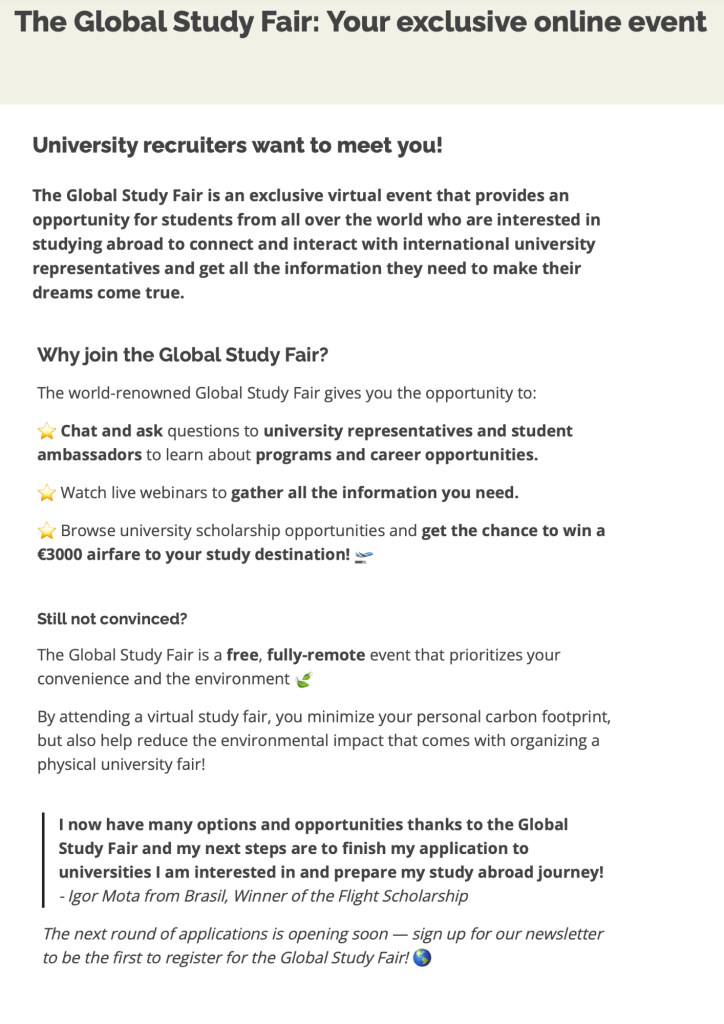
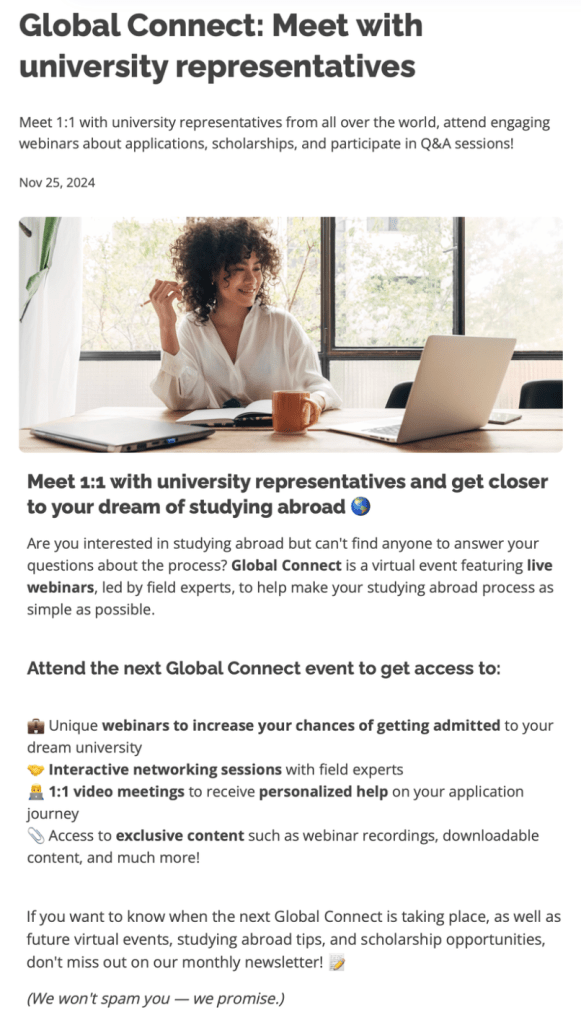
The events also lacked distinct identities, which created a lot of confusion when it came to messaging because of the similar event names and lack of distinct visual features of both pages.
Given that we didn’t have the dev resources to completely revamp the structure of the page, I had to come up with ways to make the pages more trustworthy using content only (text, images, and videos).
The Process
The project consisted of two main steps:
- Define the identity for both events. This was important as the events team only saw them as the “big” annual event and “smaller” monthly events. There was no clearly defined “why” — in other words, why students should sign up for one event over the other.
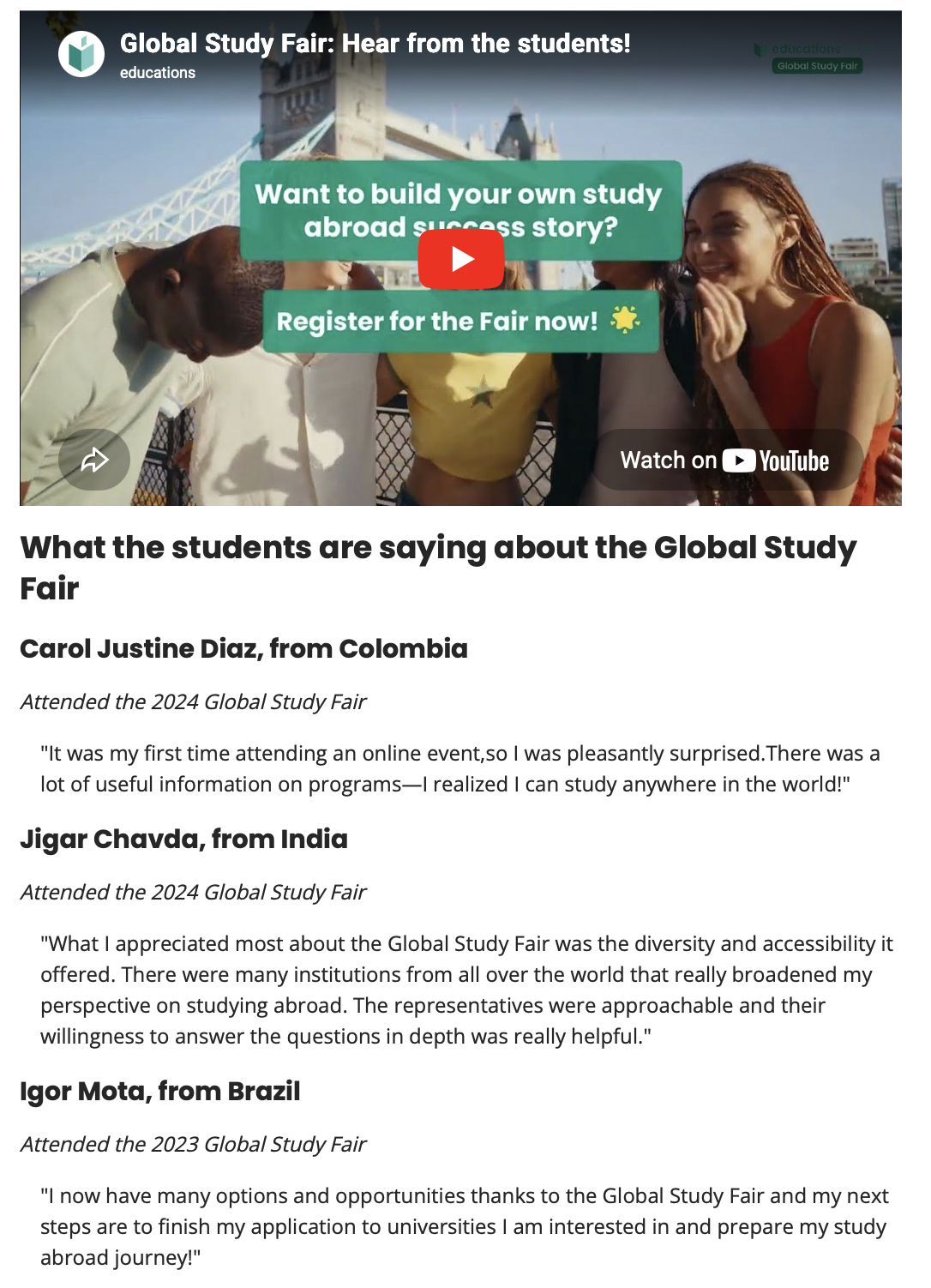
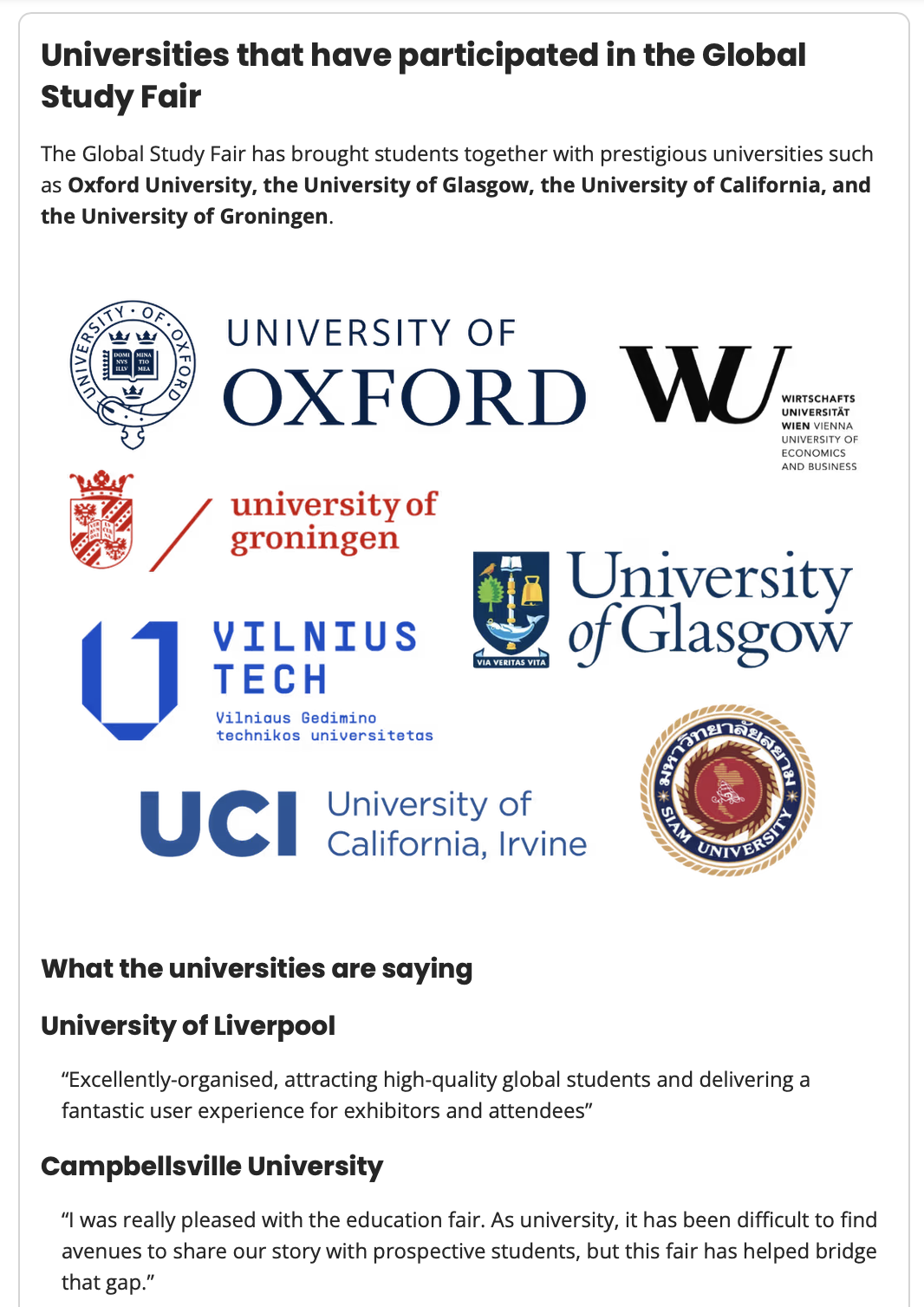
- Add social proof to show that these events are real and have history. The Global Study Fair in particular was held annually for years, so it was only a matter of finding the right content for the message we wanted to send, and repackaging it into effective visual storytelling.
1. Defining the Identity of the Events
Beyond the ‘point’ of each event, it was important to be able to visually distinguish the two events in seconds (as soon as one lands on the page).
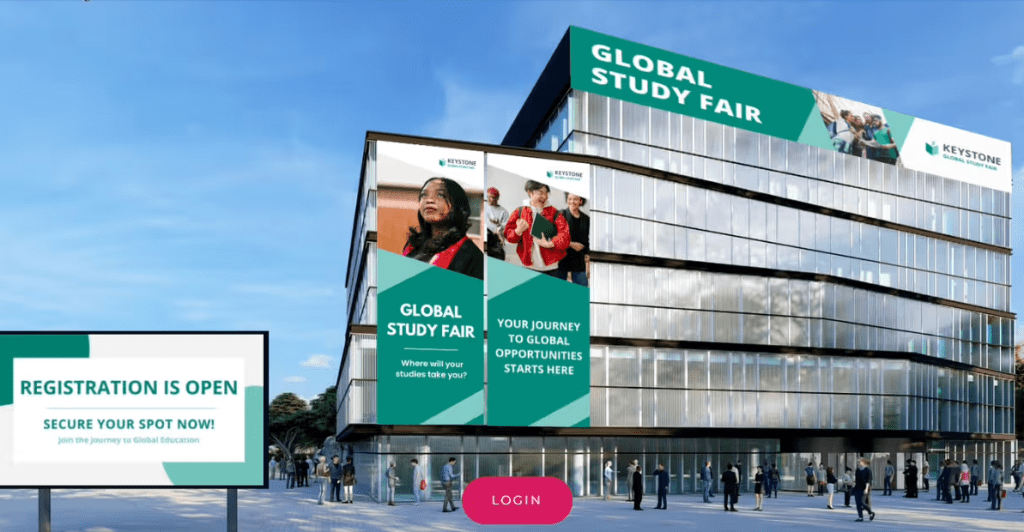
Global Study Fair (GSF)
Since GSF was the much larger (in terms of both visitors and hosts), annual event, with a large scope of topics and universities.
So, we decided to make it the ‘flagship’ event:
- Using the primary educations.com color for visual identity (teal)
- Rebranded as a flagship, exclusive annual event
- More serious tone in both writing and visuals
- More professional (but still friendly) image editing




Global Connect (GC)
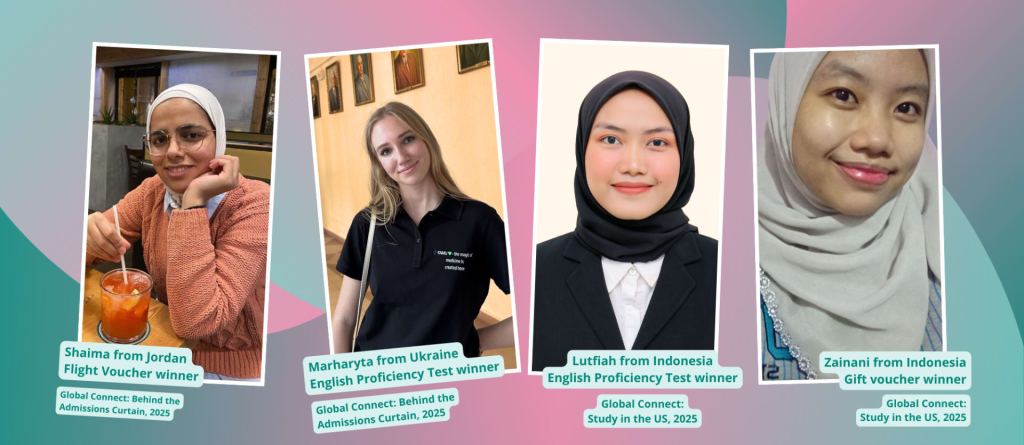
GC was a new, smaller, monthly event. Each event was built around a specific topic (i.e. “studying in Spain” or “studying business”).
Due to its nature, I decided to go for a more ‘casual’ vibe.
- Using the secondary educations.com color for visual identity (pink)
- Rebranded to emphasize the continuous, year-around value
- Spontaneous tone in messaging on the page
- More casual visual edits, emphasizing “flow”



2. Adding Social Proof
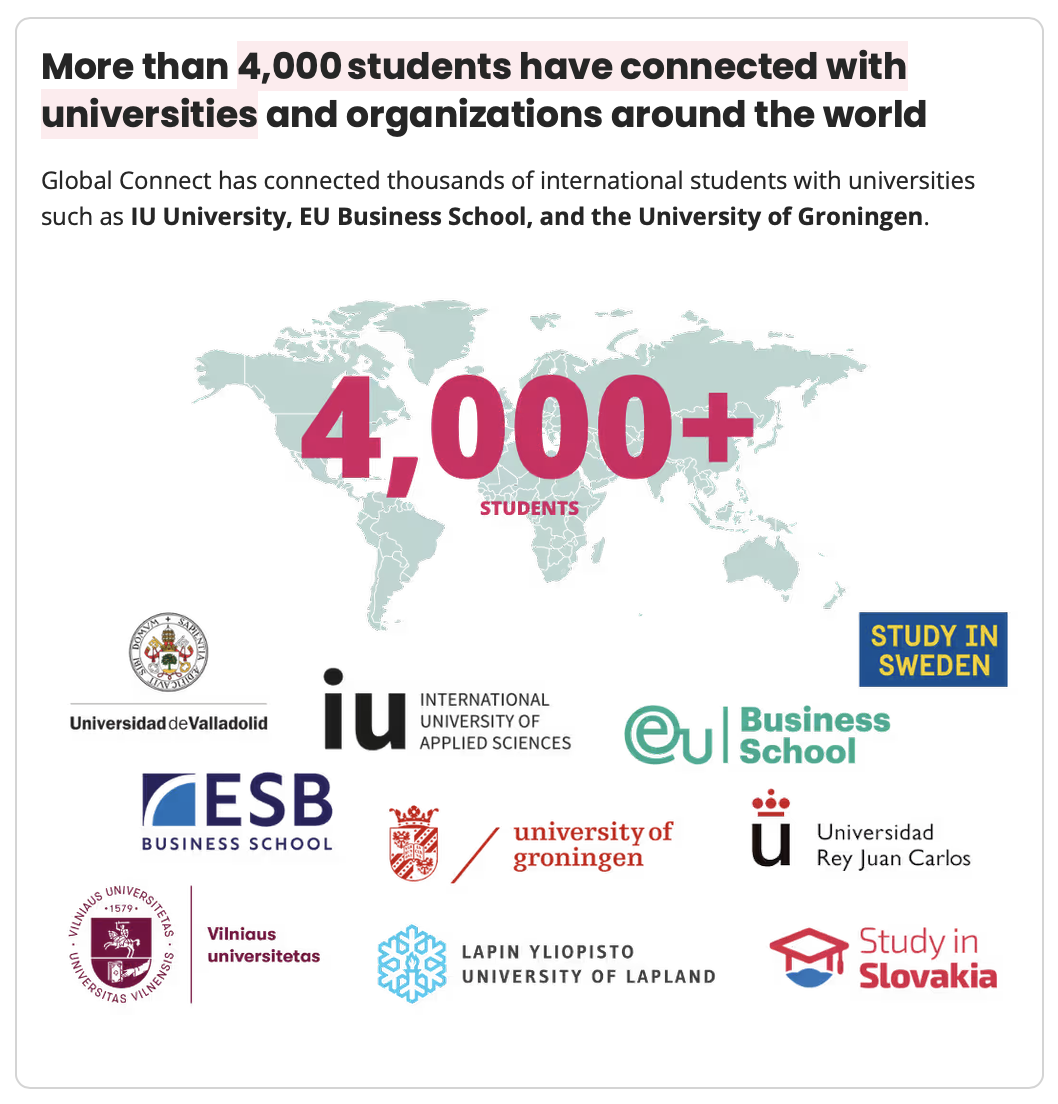
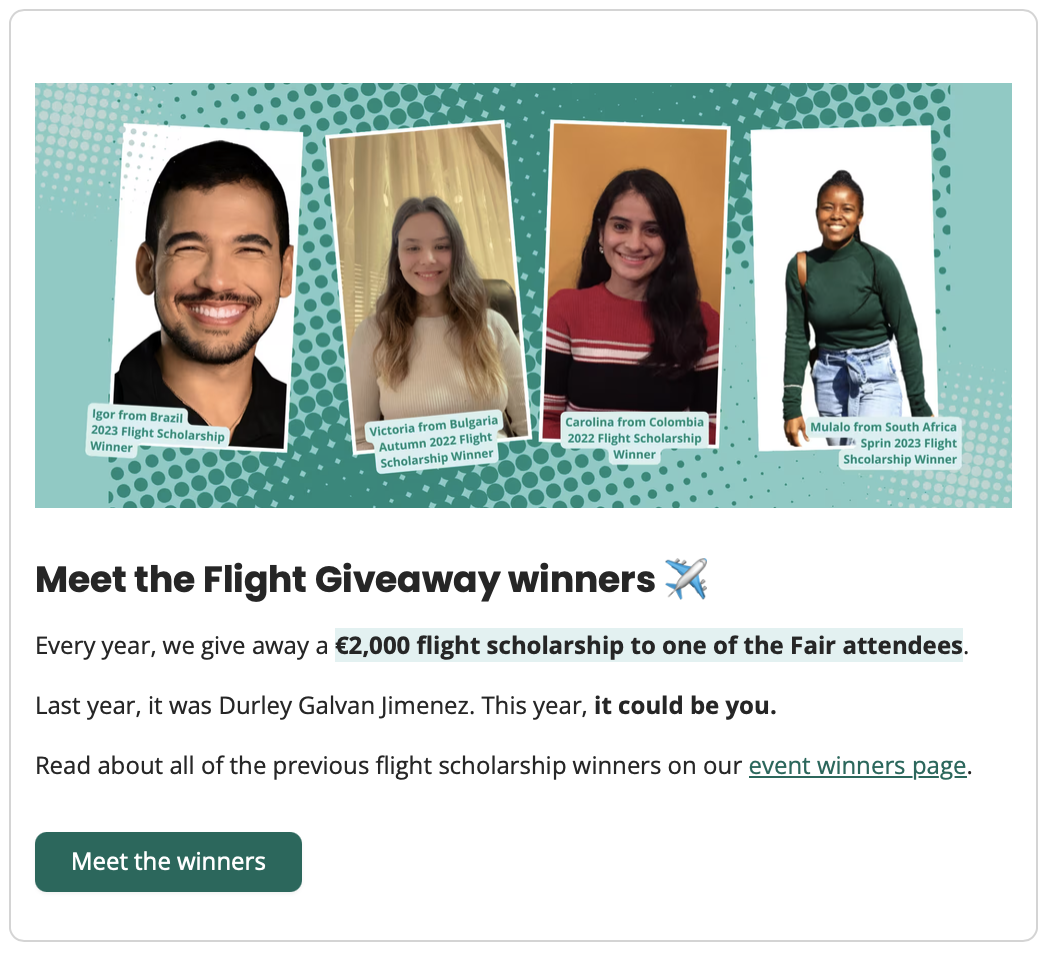
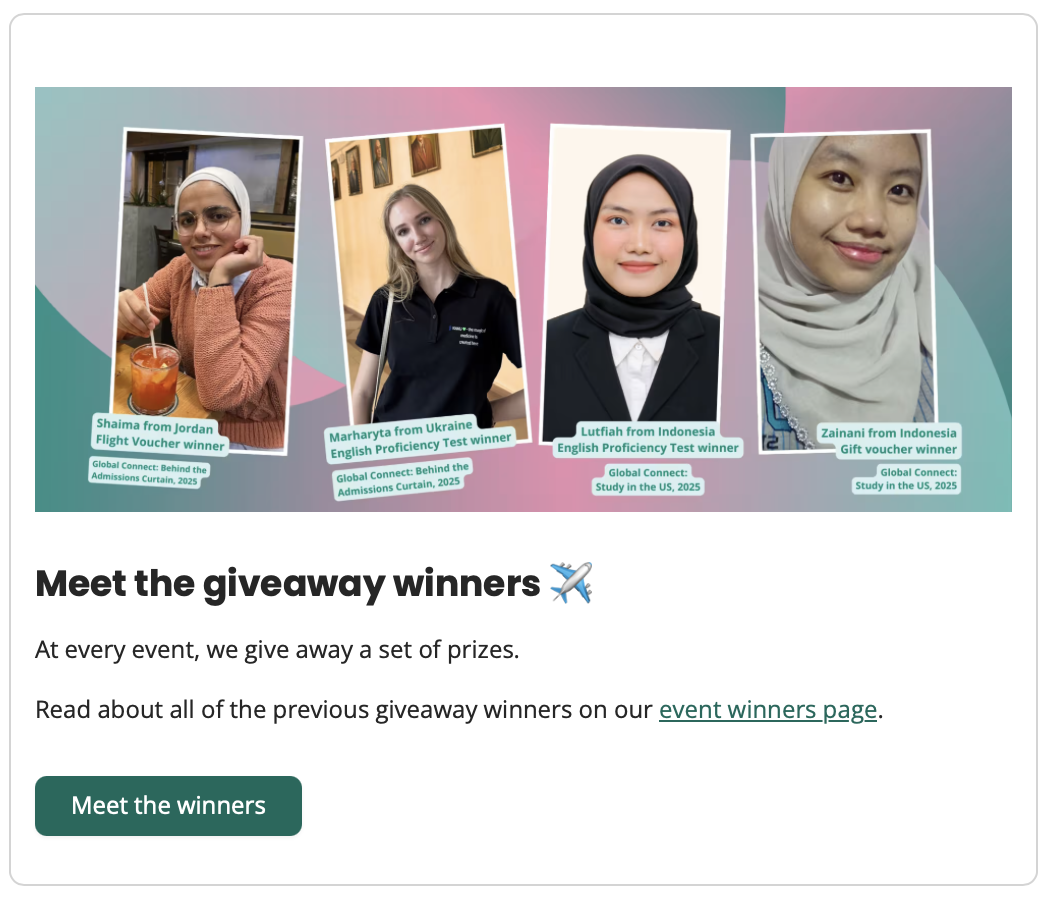
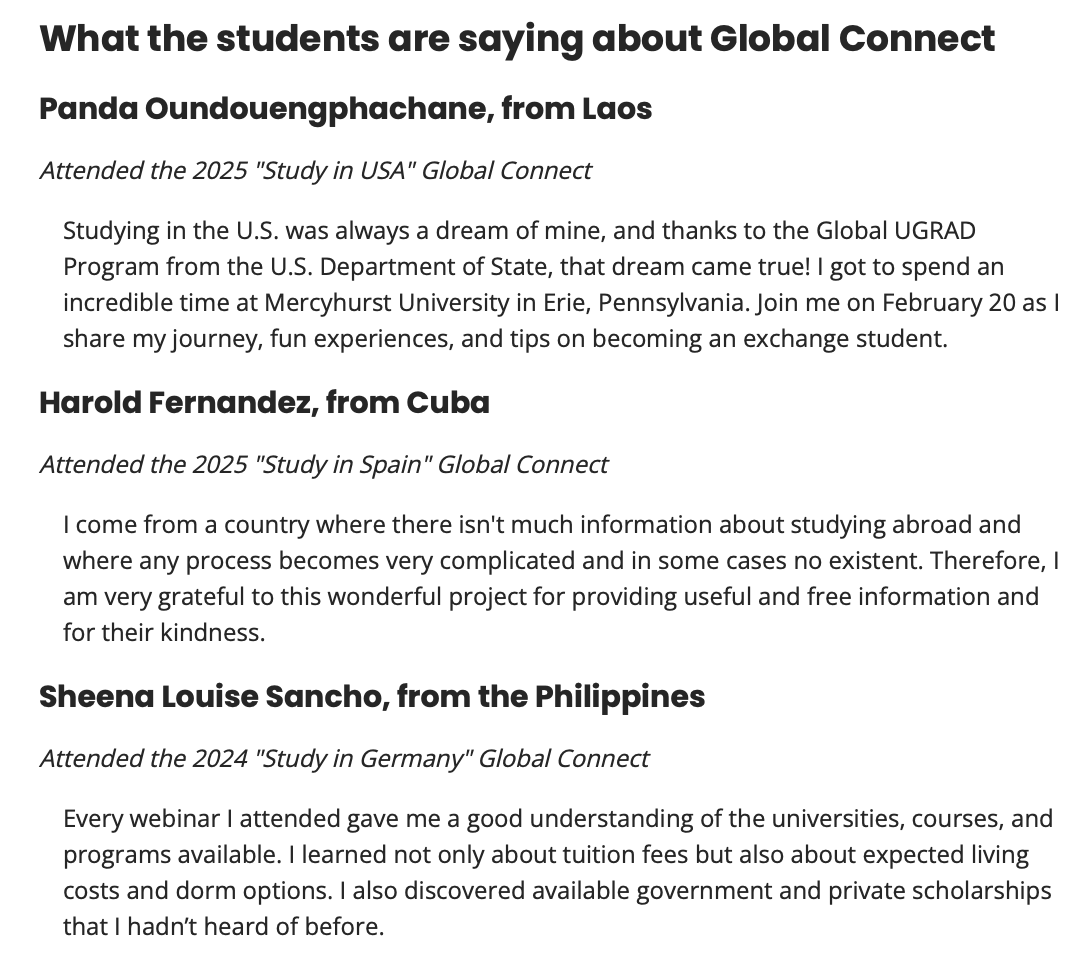
To boost trustworthiness and authority on the pages, I added:
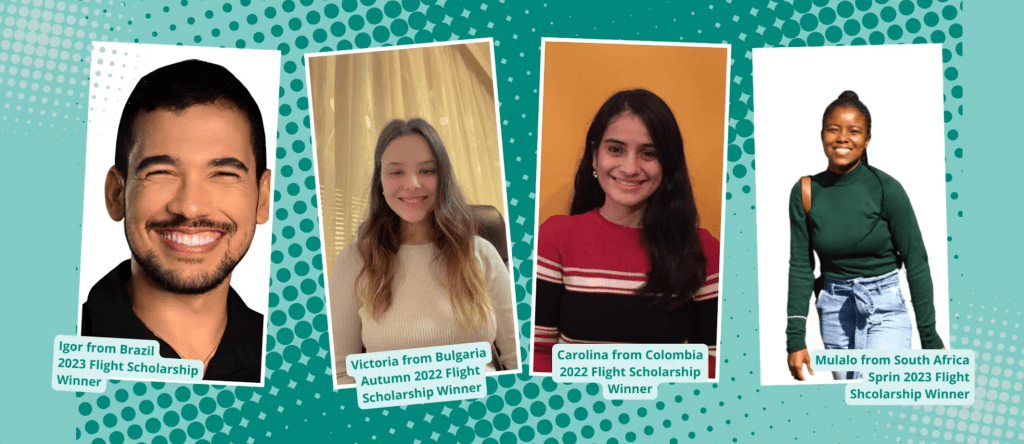
- Real photos of students
- Student opinions/testimonials
- Logos of participating universities
- Numbers/statistics where available (i.e. X numbers of students have tuned in to date!)
- Videos
You can see examples below.
Final Results
Global Study Fair (GSF)
Before
After

Global Connect (GC)
Before
After



Leave a Reply